Helping humans and technology grow up together.
← a studio and a place to ask questions
We build websites and explore how AI can support human work. The person brings the purpose, the experience, and the judgment. The technology has a job to do, not a life to direct.
Hypothesis
What kind of humans will these systems help us become?
A tool changes more than the task in front of us. It can change what we notice, what we practise, and what we trust ourselves to do. Those changes deserve our attention.
We want technology to help people think, make, and connect. AI can draft, find patterns, and ask useful questions. People should still set the direction and make the decisions.
Experience, intention
& interpretation
Reflection, patterns
& questions
Meaning, judgment
& next steps
Strategy, design, and development, monthly.
Website structure, user experience, design, content strategy, and development under one subscription. Add as many projects as you need; we work on one at a time. Founding membership is $3,990/mo for the first year.
You review as the work takes shape.
Then the next project moves forward.
Working principles
Four things we keep returning to.
People set the direction
People choose when to use AI and remain responsible for the decisions they make.
AI readings are optional. The reader decides what to take from them; the product owner sets the direction of the build.
Begin with lived experience
We learn how a person works before deciding what a tool should do.
A spread, the reader’s own words, and a journal of their practice come first.
Make the role of AI clear
Show where AI is involved, what it is being asked to do, and where its output needs review.
AI can help design a spread or offer a reading. Its output is a perspective to consider, not an authority to follow.
Leave room for reflection
A useful tool should leave people room to notice, understand, and think for themselves.
Earlier readings remain part of the journal, giving the reader time and context to notice patterns.
Field report
Spread Weaver: the reader stays the reader.
A tarot journal for physical and digital readings, with custom spreads and optional AI readings. A human-led team built it; the reader keeps the meaning.
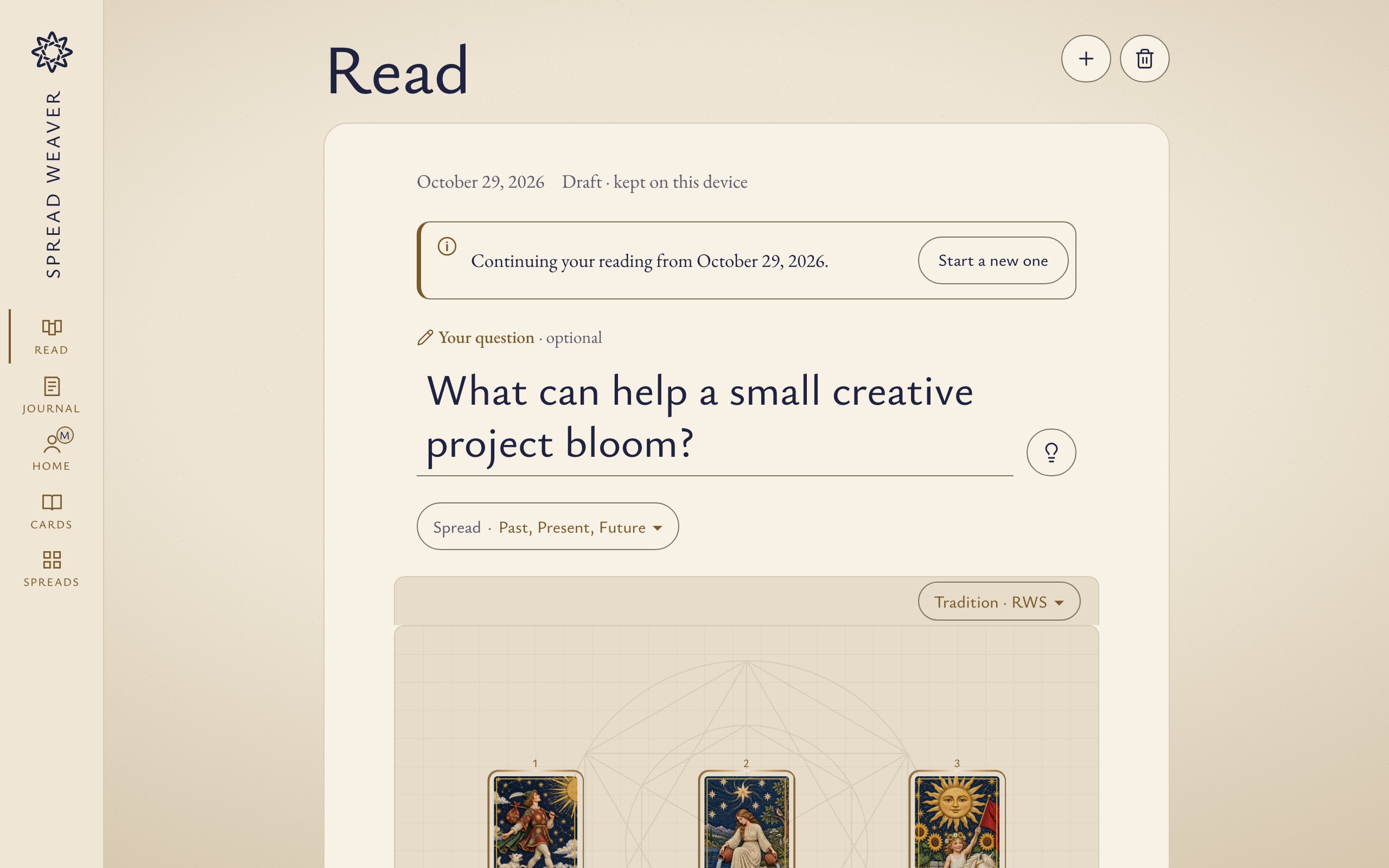
Version 2.0 is in private beta, not open for public signup. The first version is not taking new customers. This case study follows the product and its human-led build.
Areas of work
One idea, several ways to put it to work.
Our work spans websites, reflective tools, consulting, marketing, and publishing. Each starts with the same question: what does the person need, and where can technology help?
04 / Publishing & stories Taking shape
Correspondence
Letters from the work.
Notes on technology, human practice, and what we learn while building.